
Bogon IP Address Meaning, Working, Risks and Ranges

The bogon ip address may look strange to some networks, and its usage can be very crucial in detecting suspicious traffic. It might seem to be merely another technical term at first sight, but, in fact, it can be deeply related to the process of assigning and controlling IP ranges as it is done by the internet. A lot of users go into What is a bogon or What is Bogon IP Address since they observe unusual entries in logs and need to understand what is going on. Thus, the knowledge of this concept assists in enhancing network security and awareness.

In this article, you will clearly see what these addresses are, how they operate and why they should be attended to. In addition, IPv4, and IPv6 ranges, threats, and filters will also be explained. Through this, you will get a full and in-depth knowledge in a straightforward and easy-to-read manner. 

What is a bogon?

A bogon is just an IP address that does not belong to any officially allocated address range. Therefore, it is not a reflection of any actual equipment or service on the public internet. Further, the reason why these addresses exist is due to the gradual process involved in the allocation process, as opposed to an immediate process. Internet authorities issue address blocks in blocks and this leaves portions unused. Thus, the unused ones are made bogons until distributed officially. Such a dynamic nature is the reason why they should be monitored in order to have proper network operations. 

What is a bogon address?

Bogon address is in unallocated or reserved space that is owned by no one. This means that it cannot be mapped to any real-world server or user. However, Bogon addresses and reserved address there is a difference between the bogon addresses and the reserved addresses. Special ranges that are assigned to particular usage (such as a private network or testing), and bogons, which are just unassigned. There are several non-public IPs that should not be considered a bogon due to this difference. Nevertheless, both forms need to be cautiously dealt with so as to prevent routing problems. 

A quick comparison helps clarify this concept:

TypePurposePublic Use
BogonUnallocated IP spaceNot allowed
ReservedSpecial internal useLimited
AssignedValid public usageAllowed

This distinction helps administrators avoid confusion and apply correct filtering rules.

Understanding the Meaning of Bogon IP Address in Networking

Bogon ip address is an IP address that is yet to be allocated by the global internet authorities. Simply put, it falls within unused address space, which is why it should not be used by any law-enforcing organization. Thus, finding such an address in traffic will most likely point to misconfiguration, or even suspicious conduct.

Simultaneously, the internet is constantly changing and IP ranges are also changing. There are ranges that go unused over a period of years and new ones that are achieved after allocation. Due to this fact, a bogon is not necessarily invalid forever. Rather, it can become a legitimate address after being assigned and thus, routine updates to network systems are vital. 

How does a bogon work?

To understand how a bogon ip address works, you need to consider how IP distribution operates globally. The authorities have a big pool of addresses, which are allocated at a slow pace. At least until allocation, these addresses are in bogon space. The working flow is simple stepwise. Global registries create and manage first the IP ranges. Then there are obviously some ranges that are not assigned yet. Lastly, any traffic which originates between those ranges is considered bogon traffic.

Interestingly, this classification is not a permanent one. An example is a range which happened to be idle previously, and then validated after being allocated. This means that network systems need to update their bogon lists frequently. Otherwise, they can either compromise legitimate traffic or allow harmful packets to traverse through them unnoticed. 

Risks & prevention of bogons in modern networks

A bogon IP address poses a number of security threats since it cannot be traced. It does not form part of a real object hence it is always used by attackers to conceal their identity. This makes it hard to follow up malicious activity.

One of the common risks is denial-of-service attacks, spoofed connections, and unauthorized scanning. In addition, such addresses can be used to send malicious data by attackers to overcome simple security checks. Consequently, negligence on bogon traffic can lead to systems being at real risk.

Meanwhile, prevention practices contribute to decreasing these risks. Network administrators exercise filtering measures and closely guard the traffic patterns. Also, they refresh their settings on a regular basis to incorporate new IP addresses. Active maintenance can therefore be considered to be more secure. 

Bogon filtering and blacklists

Filtering is also important in managing bogon traffic. It enables networks to filter out unwanted packets prior to them targeting vital systems. Thus, it provides a preliminary protection against unseen dangers. 

Different filtering techniques are commonly used in networks:

  • Access Control Lists define rules to block specific IP ranges
  • BGP filtering controls routing behavior at a broader level
  • DNS-based blacklists detect and block malicious sources

A comparison table makes this clearer:

MethodFunctionUsage
ACLsRule-based blockingSmall networks
BGP FiltersRouting controlLarge networks
DNSBLReal-time detectionEmail and servers

Because IP allocations change frequently, these filters require constant updates. Otherwise, outdated lists may reduce efficiency or create false positives.

IPv4 bogon ranges and their practical use

The IPv4 still serves much of the world in terms of networking and the system utilizes a straightforward dotted decimal format that most systems can easily decipher. Specific ranges, however, are bogon or special-use ranges such that they are not expected to be reflected in any routing in use by the general population. Thus, their occurrence in logs is frequently common cause of internal traffic, testing or misconfigured systems. More so, by integrating the theoretical ranges with real IP examples, you will be in a position to realize how these addresses interpret in real life situations.

Furthermore, a large number of network logs have mixed entries that contain private and public-appearing IPs. As an example, addresses such as 10.230.5.15, 10.24.1.53, and 10.24.39.113 are in private ranges; they must remain inside the networks. Conversely, 122.176.18.49 or 183.63.127.22 IPs seem to be open, hence they need to be validated to prove to be authentic. This makes an analysis of both combined to get a better and more precise picture of the regime of network behavior.

IPv4 Bogon and Special-Use Ranges with All Required IP Entries.

Range / IPDescription
0.0.0.0/8“This” network reference
10.0.0.0/8Private-use networks (10.230.5.15, 10.24.1.53, 10.24.39.113, 10.24.1.71, 10.24.0.1.53, 10.24.0.1.71, 10.24.53)
100.64.0.0/10Carrier-grade NAT
127.0.0.0/8Loopback
127.0.53.53Name collision occurrence
169.254.0.0/16Link-local
172.16.0.0/12Private-use networks
192.0.0.0/24IETF protocol assignments
192.0.2.0/24TEST-NET-1
192.168.0.0/16Private-use networks
198.18.0.0/15Benchmark testing
198.51.100.0/24TEST-NET-2
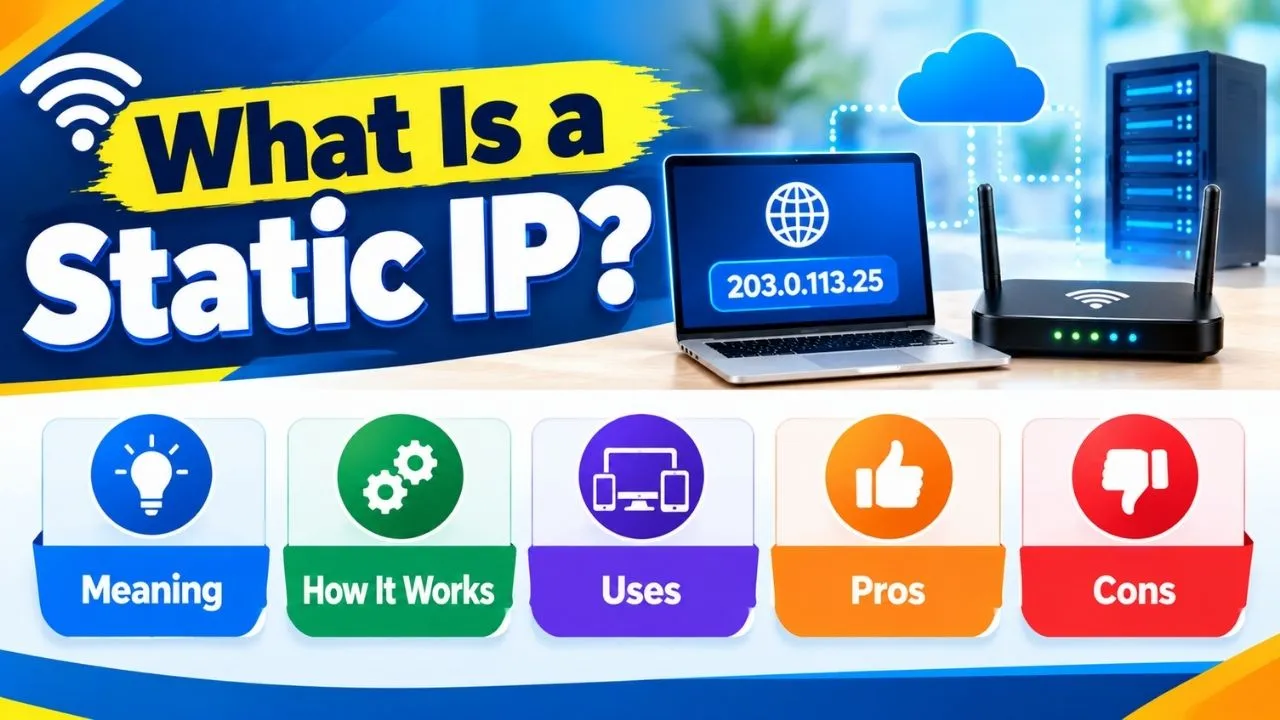
203.0.113.0/24TEST-NET-3
224.0.0.0/4Multicast
240.0.0.0/4Reserved for future use
255.255.255.255/32Limited broadcast
10.230.5.15Internal private IP example
10.24.1.53Internal private IP example
10.230.5.15Repeated internal IP entry
10.24.39.113Internal private IP example
122.176.18.49Public IP example
10.24.53Internal network short-format entry
183.63.127.22Public IP example
10.24.1.71Internal private IP example
66.228.54.109Public hosting-related IP (corrected format)
10.24.0.1.53Internal DNS-style IP
122.176.83.125Public IP example
13.232.238.236Cloud/public IP example
111.159.90.132Public IP example
10.24.0.1.71Internal private IP example

The 10.x.x.x between the private IPs as indicated in the table are only to be used internally. In the meantime, social IPs should be closely monitored as they can either indicate the legitimate user or a suspicious activity. Hence, their combination allows discerning abnormal patterns more efficiently. 

IPv6 bogon ranges explained in simple terms

IPv6 brings in a new addressing methodology, which incorporates hexadecimal notation and can accommodate a huge number of equipment. Nevertheless, similar to the IPv4, there are IPv6 ranges that belong to bogon or special-use. Thus, they are not supposed to be used in the public routing, and as far as it happens, they tend to reflect the problems in the route set-ups or suspicious traffic when occurring. Also, entries in network logs are occasionally mixed or malformed, making them more difficult to analyze.

Further, the perfect formatting is not always realized in real-life logs. For example, entries like 111.90.150.188, 175.107.59.138, and 185.63.253.20 appear as IPv4 addresses, yet they can still show up in IPv6-mapped environments. Likewise, invalid entries like 10.24.1.71/ gating or 10.24.1.71/tms are evidence of application level tagging, and not the pure IP formatting. Thus, awareness of the safe IPv6 ranges and realistic log entries can assist administrators to identify abnormalities in a timely manner. 

IPv6 Bogon Ranges with Mixed Log Examples.

IPv6 Range / EntryDescription
::/128Unspecified address
::1/128Loopback address
::ffff:0:0/96IPv4-mapped addresses (111.90.150.188, 175.107.59.138)
::/96IPv4-compatible addresses
100::/64Black hole routing
2001:10::/28ORCHID identifiers
2001:db8::/32Documentation prefix
fc00::/7Unique local addresses
fe80::/10Link-local communication
fec0::/10Deprecated site-local
ff00::/8Multicast
185.63.253.20Public IPv4 mapped scenario
124.105.5.80External traffic example
13.127.144.213Cloud-hosted IP example
103.203.136.98Regional public IP
10.24.53Incomplete private IP entry
10.24.1.71/gatingTagged internal routing entry
10.24.1.71tmsApplication-level identifier
10.24.1.71/tmsService-based routing notation
10.24.1.71gatingInternal gateway tagging
10.24.1.71/mh-opsOperational tag reference
10.24.1.71/tcTraffic control label
10.24 1.53 flo liteMisformatted log entry

According to the table, it is common to find IPv6 environments that contain IPv4-mapped addresses not to mention irregular log entries. Therefore, Administrators should be keen on scrutinizing every entry rather than depending on format validation only. Moreover, defective entries are typically application logs or monitoring tools, but not routing data. 

Additional bogon ranges and mapping details

Other bogon spaces mark the interface between the IPv4 and IPv6 worlds, and are used to assist systems in communicating in transition periods. However, these mappings are complex in the sense that they unify various forms of addresses into one structure. Consequently, these mappings have to be known to network administrators so that they can accurately distinguish legitimate traffic and prevent suspicious traffic. Moreover, the integration of IPv4 and IPv6 records into a single structured format can be used to simplify the analysis and increase the accuracy of monitoring.

What is more, the real-world logs do not often contain clean and well-structured entries. In these cases, they usually contain a combination of mapped addresses, internal IPs, tagged or malformed values. As an example, there can be encountered private IPs (10.230.5.15 or 10.24.1.53) or IPv6-mapped formats, but there are also entries like 10.24.1.71/tms or 10.24 1.53 flo lite, that mean application-level tagging. So by using a mixture of IPv4 and IPv6 mappings in a single table, visibility is made better and easier to troubleshoot. 

Merged Additional Bogon Ranges with IPv4 and IPv6 Mapping

The table below integrates IPv6 bogon mappings with their IPv4 equivalents and also includes practical log entries. This combined structure helps you understand both theoretical ranges and real-world usage together.

IPv6 Range / EntryIPv4 Mapping / EntryDescription
2002::/240.0.0.0/86to4 bogon mapping
2002:a00::/2410.0.0.0/8Private-use mapping
2002:7f00::/24127.0.0.0/8Loopback mapping
2002:a9fe::/32169.254.0.0/16Link-local mapping
2002:ac10::/28172.16.0.0/12Private network mapping
2002:c000::/40192.0.0.0/24Protocol assignment mapping
2002:c000:200::/40192.0.2.0/24TEST-NET mapping
2002:c0a8::/32192.168.0.0/16Local network mapping
2002:c612::/31198.18.0.0/15Benchmark testing mapping
2002:c633:6400::/40198.51.100.0/24TEST-NET-2 mapping
2002:cb00:7100::/40203.0.113.0/24TEST-NET-3 mapping
2002:e000::/20224.0.0.0/4Multicast mapping
2002:f000::/20240.0.0.0/4Reserved mapping
2002:ffff:ffff::/48255.255.255.255Broadcast mapping
2001::/400.0.0.0/8Teredo mapping
2001:0:a00::/4010.0.0.0/8Private Teredo mapping
2001:0:7f00::/40127.0.0.0/8Loopback Teredo mapping
2001:0:a9fe::/48169.254.0.0/16Link-local Teredo mapping
2001:0:ac10::/44172.16.0.0/12Private Teredo mapping
2001:0:c000::/56192.0.0.0/24Protocol Teredo mapping
2001:0:c000:200::/56192.0.2.0/24Test Teredo mapping
2001:0:c0a8::/48192.168.0.0/16Local Teredo mapping
2001:0:c612::/47198.18.0.0/15Benchmark Teredo mapping
2001:0:c633:6400::/56198.51.100.0/24Test-net Teredo mapping
2001:0:cb00:7100::/56203.0.113.0/24Documentation Teredo mapping
2001:0:e000::/36224.0.0.0/4Multicast Teredo mapping
2001:0:f000::/36240.0.0.0/4Reserved Teredo mapping
2001:0:ffff:ffff::/64255.255.255.255Broadcast Teredo mapping
::ffff:0:0/96111.90.150.188, 175.107.59.138IPv4-mapped IPv6 entries
::ffff:0:0/96185.63.253.20, 124.105.5.80Public mapped traffic
::ffff:0:0/9613.127.144.213, 103.203.136.98Cloud and regional IP mapping
fc00::/710.230.5.15, 10.24.1.53Internal private mapping
fc00::/710.24.39.113, 10.24.1.71Internal network mapping
fe80::/1010.24.0.1.53, 10.24.0.1.71Link-local mapped entries
fe80::/1010.24.53Short-format internal entry
Mixed Log Entry10.24.1.71/gatingTagged routing entry
Mixed Log Entry10.24.1.71tmsApplication identifier
Mixed Log Entry10.24.1.71/tmsService notation
Mixed Log Entry10.24.1.71gatingGateway tag
Mixed Log Entry10.24.1.71/mh-opsOperations tag
Mixed Log Entry10.24.1.71/tcTraffic control label
Mixed Log Entry10.24 1.53 flo liteMisformatted entry

Practical Understanding of the Merged Mapping

The combined table makes it obvious that IPv4 and IPv6 interrelate in the contemporary networks. Structured mappings, such as 2002::/24 or 2001::/40, on the one hand, indicate formal transition technologies. On the right, 10.24.1.71/tms or 10.24.1.71gating are actual logging formats in the real world that have added metadata.

Hence, format validation should not be used exclusively by their administrators. They need to do joint context, mapping type, and pattern of use analysis. Due to this combined methodology, they are able to detect legitimate traffic, misconfigured traffic or even harmful traffic.

Moreover, by knowing such combined mappings, filtering rules can be improved. Systems that identify the IPv4 patterns as well as the IPv6 patterns can be able to block data that is not required. Consequently, networks are less susceptible, reliable, and manageable. 

Conclusion

A bogon IP address might appear to be a technical concept but this is actually important in keeping the network safe. After knowing What is a bogon and the behavior of these addresses, then you can recognize suspicious action easily. As such, regular monitoring with changes in filtering is necessary to make network operations secure and efficient. 

Read Our More Blogs: What Is Private DNS | Ipv4 and Ipv6 diagram Explained


Leave a Reply

Your email address will not be published. Required fields are marked *