
The internet feels smooth and effortless, yet strong security systems quietly protect every interaction you make. When using a website, email or paying with money online, encryption provides security against unintended access to your data. It is precisely in that place that the idea of what is a public key comes in, as it aids in safeguarding communication in a straightforward but effective manner. It is a term that most people hear, but they hardly ever know how it works in the real world. This article will discuss public key encryption, its functionality, its applications in practice, and its relevance in contemporary systems. Throughout the journey, you will also find out the difference between it and private keys, the potential risks, and how this technology transformed into the foundation of digital security.
What is a public key encryption?
Public key encryption is a technique that involves two unique keys in order to secure information. It does not use a common key but splits the process into decryption and encryption with two keys that relate to each other. Such a design guarantees better security since there are minimal risks of exposing keys.
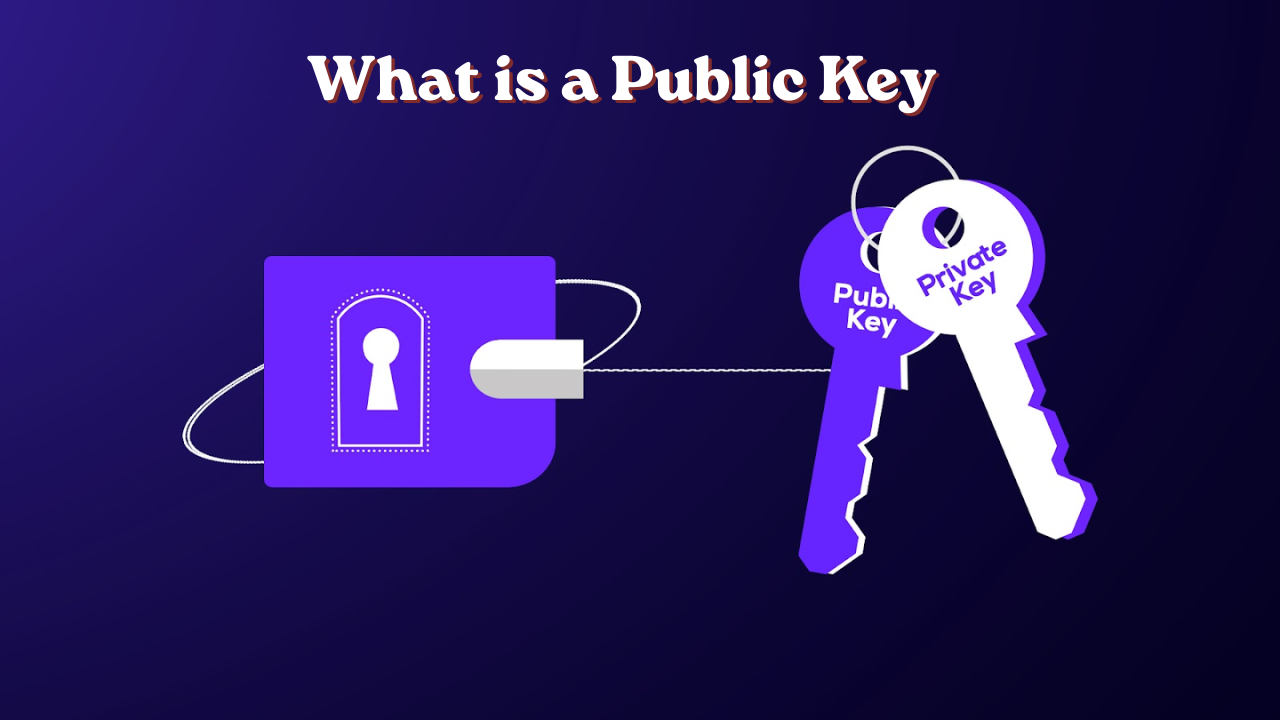
When you explore what is a public key, you will learn that it is the lock in this mechanism. Anyone is capable of encrypting a message with the help of a public key, but only a particular privately controlled key can be used to open the message. Due to such a scheme, a third party can get the information, but will not be able to decipher it without the private key.
In addition, the encryption scheme of a key using a public key is based on mathematical operations that generate a strong and special pair of keys. These processes make the keys virtually impossible to guess or break down. This has made this method essential to industries like banking, healthcare, and e-commerce, as it helps to keep sensitive information secure.
How public key encryption works in real-world communication
To understand what is a public key, it is good to read through the process by which it works. This system has a logical flow whereby data is safe between the sender and the receiver.
First, it creates two keys that comprise a public key and a private key. This is followed by the distribution of the public key in an open manner, but the secret key should be kept confidential. The sender would then encrypt the message with the public key of the recipient. Lastly, the receiver decrypts it with his/her key.
Due to this systematic process, communication is secure even on public networks. Moreover, keys are separated so that unauthorized users cannot have access to the information.
| Step | Action Description |
| Key Generation | Create public and private key pair |
| Key Sharing | Share public key with others |
| Encryption | Encrypt data using public key |
| Transmission | Send encrypted data |
| Decryption | Use the private key to access data |
For example, when a company transfers confidential information to a client, it will encrypt the information with the key, which is the public key of the client. This leads to the fact that only the client can access the file with his/her own key. This will provide privacy and trust when communicating digitally.
Importance of public keys in digital communication
Public keys play a vital role in maintaining security across digital platforms. They help in the protection of sensitive data in a system-to-system analogy. In the absence of encryption, personal information (including passwords or details of credit card payments) can be easily intercepted and deciphered by attackers. However, this data is converted by the public key systems to unreadable formats, thereby preventing misuse. Hence, they serve as a powerful protection tool against cybersecurity attacks.
Moreover, public keys also enable authentication via digital signatures. This aspect will ensure that the sender is genuine and that there is no distortion of data. Consequently, users have confidence in the information they get. Also, it is the integrity of online services that is contributed by public keys. They are essential to businesses to ensure the security of transactions as well as offer safe browsing experiences to users. Therefore, secure communication in the digital world is based upon the notion of public key systems.
Public key applications across modern technologies
Public key systems operate across many digital environments, and their applications continue to grow with technological advancements. They have websites, cryptocurrencies, and they can offer security features that are important in safeguarding the information of users.
1. Encryption
The most widespread application of the public keys is encryption. It also enables the user to encrypt messages and files in transit. This means that the data can only be accessed by the desired recipient. An example of this is the use of email, which encrypts messages between individuals. Someone who intercepts the email cannot decode the email, as they do not have the private key. So, encryption provides confidentiality in daily communication.
2. Digital signatures
Digital signatures are used to ensure the integrity and authenticity of data. They ensure that the message is sent by an authority and has not been changed. This is done by first generating a hash value of the file. This is then encrypted by the sender with his/her own key. Then, the receiver verifies it with the help of the public key. In case the two values are equal, there will be no changes in the data.
3. Secure Socket Layer and Transport Layer Security connections
SSL and TLS protocols rely on encryption through a public key to establish secure communication between browsers and servers. Protocols are automatically on when you find the prefix HTTPS in a web address. First, the system relies on public key encryption as a way of establishing a secure connection. Subsequently, it changes to a rapid encryption technique to sustain communication. As a result, your data stays safe while browsing.
4. Cryptocurrencies
Cryptocurrencies also rely heavily on public key systems. In this scenario, the public key serves as a wallet address, which enables users to get money. Meanwhile, the ownership is verified by the private key and enables transactions. Users should therefore ensure that they save their private keys in secure places so as not to lose access to their digital properties.
How a public key differs from a private key is clearly explained
The notable comparison will enable you to know the distinction between the public and the private keys. Both keys are used simultaneously, but the purposes in the encryption system are different. The public key can be accessed by all and encrypts data. On the other hand, the secret key remains hidden and performs decryption. Due to such a split, the system is more secure.
| Feature | Public Key | Private Key |
| Accessibility | Shared publicly | Kept secret |
| Function | Encrypts data | Decrypts data |
| Ownership | Used by anyone | Used only by owner |
| Role | Locks information | Unlocks information |
In simple terms, you can think of the public key as a lock that anyone can use, while the private key acts as the only key that can open it. Therefore, this combination provides a secure and reliable method for data protection.
Public key risks and how to reduce them effectively
Although public key systems offer strong security, certain risks still exist. Awareness of these risks encourages better precautions to be taken by the users. A frequent problem is the weak key generation. Attackers can crack very short keys (say, 32-bit) or foreseeable keys by employing the latest decryption methods. This is why very strong algorithms have to be employed. The other challenge concerns a management key. Unless users secure or change their keys frequently, there is a risk that attackers can use vulnerabilities to their advantage. Moreover, the loss of a private key may lead to the irreversible loss of data.
Man-in-the-middle attacks are also a threat. There is a time when attackers will intercept communications and adopt the identity of a trusted party. Consequently, they are able to capture sensitive information. To minimize such risks, users are advised to ensure they check certificates, employ trusted encryption standards and to change keys after some time. As a result, the practices enhance the overall security and minimize vulnerabilities.
The origin and evolution of public key encryption systems
Public key encryption originated in the 1970s when researchers explored new ways to secure communication. They desired a way that would not involve handing over secret keys at all. Whitfield Diffie and Martin Hellman coined the idea of asymmetric cryptography in 1976. They produced the Diffie-Hellman key exchange method due to their work.
This innovation enabled two parties to establish a common secret on an insecure path. Consequently, it revolutionized digital communication systems. Encryption methods were enhanced with the advantages and power of new algorithms like RSA. Nowadays, people use a great variety of applications to work with the help of public key systems, such as secure websites, financial systems, and verification of digital identities. That is why their development is going to influence the future of cybersecurity.
Final Thoughts
Understanding what is a public key gives you a clear picture of how digital security works behind the scenes. It keeps confidential information, provides secure communication, and promotes trust within the online environment. This system silently but effectively works out when it comes to browsing websites up to the point of making their transactions. With the increasing use of technology, the role of public key encryption will continue to grow. Hence, reading about this idea keeps you informed and more prepared for the digital age.
Read Related Blogs: